Tampakaria
Halepa · Chania · Crete
Ταμπακαριά
Halepa · Chania · Crete
Ταμπακαριά
IThe place
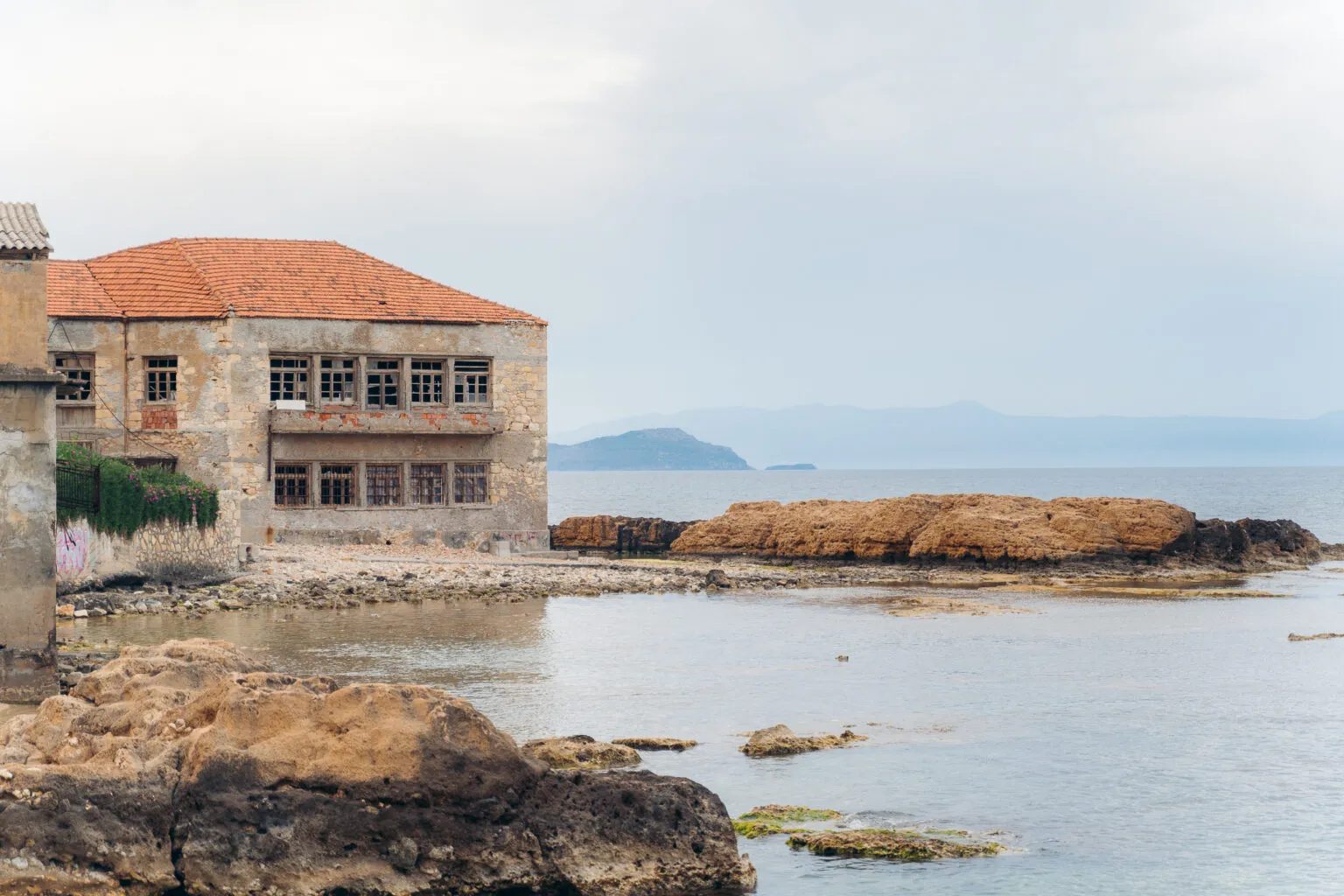
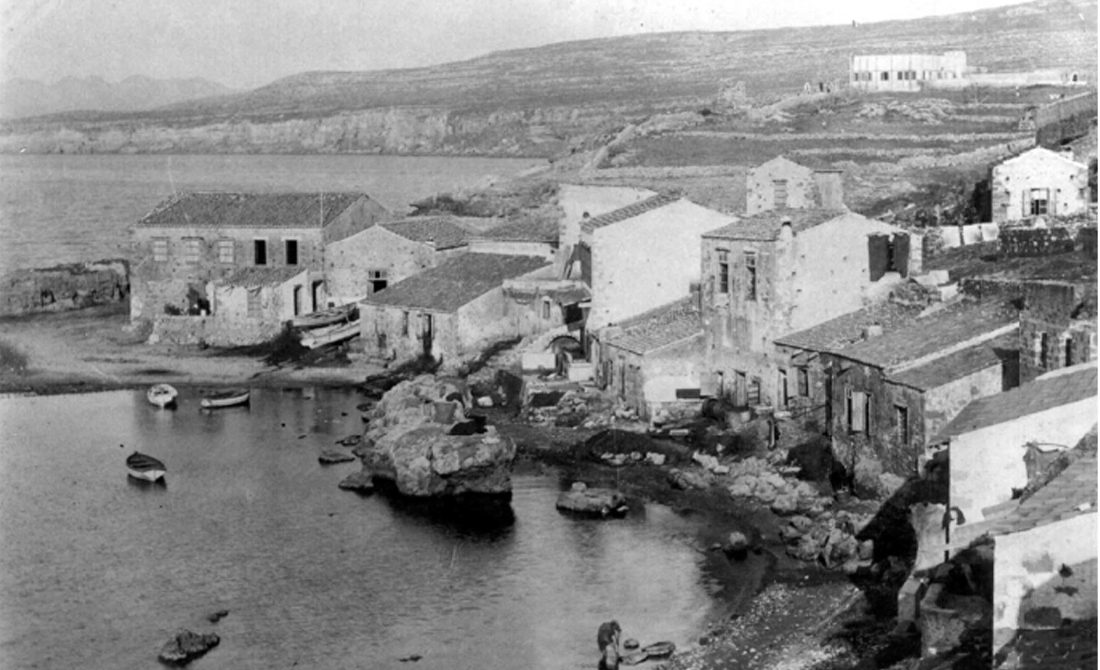
Tampakaria is a street of tanneries on the rocks east of Chania. Most of them are empty, and a few of them are still working.
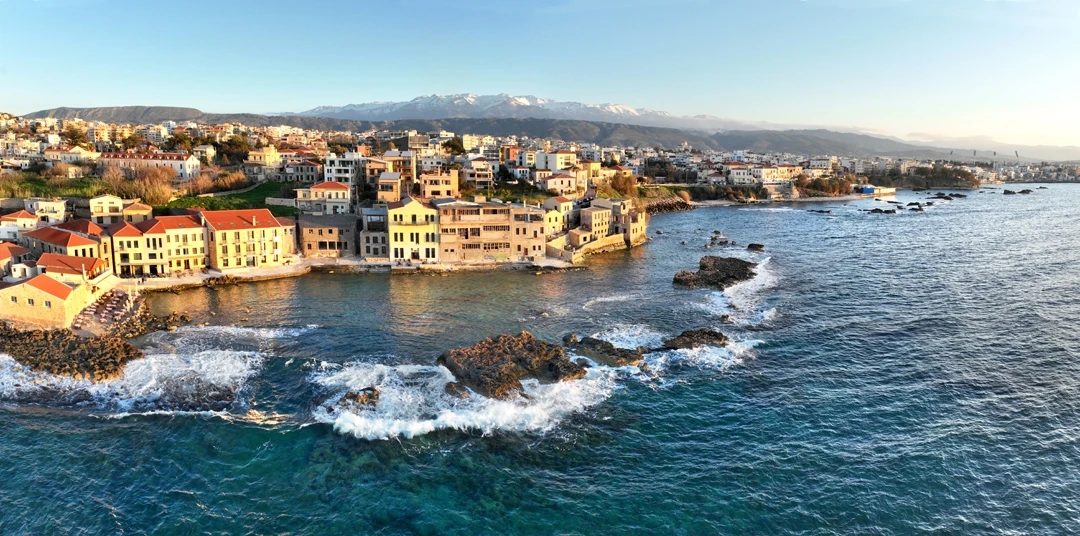
The buildings stand on the shore below Halepa, the quarter where consuls and merchants built their villas in the nineteenth century. The tanners were put out here for one reason above all, which was the smell. Turning a raw skin into leather involves lime, dung and weeks of soaking, and the smell of it carries a long way. On this point the wind took it out to sea rather than up into the town.
The name comes from tabak, the Arabic and Turkish word for a hide. A tanner was a tabakis. Other Greek towns have tanning quarters named from the same root, among them Chios, Ioannina, Larissa and Amfissa. In English you will see the neighbourhood spelled both Tampakaria and Tabakaria. It is pronounced with a b.
IIWhy here
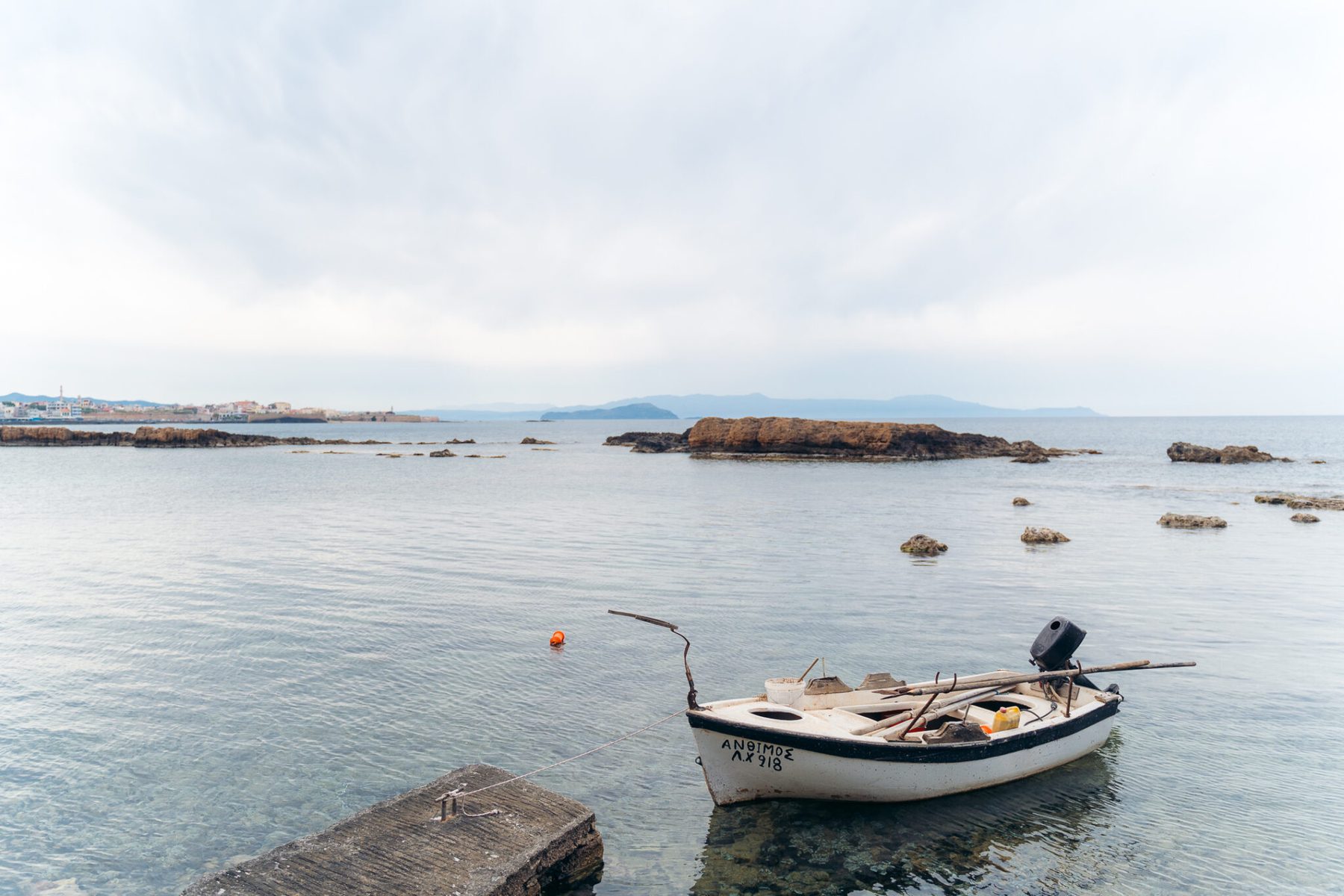
The port lay a short cart ride away, so raw skins could be collected and finished leather delivered inside a morning. The wells here held slightly salty groundwater in large quantities, and the early stages of the work used enormous amounts of it. Best of all, the sea in front was shallow and broken by flat rock, which gave the tanners somewhere to soak the skins.
The first tanneries went up between 1830 and 1840, the decade when Crete was governed from Egypt under Muhammad Ali. Before that, farmers from the villages of Apokoronas had already been building sheds along this water and working skins for themselves. Halepa first appears in the records as a settlement of its own in 1842, and by 1920 it had been absorbed into Chania.
IIIThe work
The raw material was animal skin with the hair still on it. Smaller workshops used goat and sheep from the Cretan villages. The larger ones used ox, camel and horse, shipped in from west Africa and from Nigeria in particular.
The skins reached the port of Chania in bales and came out along the coast on four-wheeled carts, one horse to each. They were unpacked by the water, tied with rope and left in the sea until they were soft enough to scrape.
From there they went into pits of quicklime, which loosened the hair so it could be scraped off. The lime was mixed with dog dung, collected around the squares and streets of Chania by children who were paid unusually well for an unpleasant errand.
Only then did the tanning itself begin, in tanks of fresh water mixed with ground acorns from the valonia oak.
The acorn is what turns a skin into leather. Its cup is unusually rich in tannin, and tannin binds to the protein in the skin so that it will no longer rot and stays soft once dry. An untreated skin dries hard as a board and then decays. Pine and mastic bark contain the same substance and were used in the same way.
The acorns came from Rethymno, where the oak trees were beaten with poles like olive trees. Sold by the oka, an old measure of about one and a quarter kilos, the crop could be worth more to a farmer there than his olive oil.
What left the buildings was thick leather for shoe soles, waterproof leather, and soft goatskin for the uppers of finer shoes. Most of the footwear in western Crete was made from it.
The oak trees at Rethymno were beaten with poles like olive trees, and the crop could be worth more to a farmer there than his olive oil.
IVThe trade
At the height of the trade, in the 1950s, something like eighty tanneries operated along this shore. Some accounts put the number nearer ninety.
The labour came from Koum Kapi, the poor quarter immediately to the west, where most men worked casually at the port or did not work at all. A place in a tannery was a step up, and families took it for generations.
The first powered machinery arrived around 1925, and more was installed after the Second World War. Work stopped altogether during the German occupation and started again once it ended.
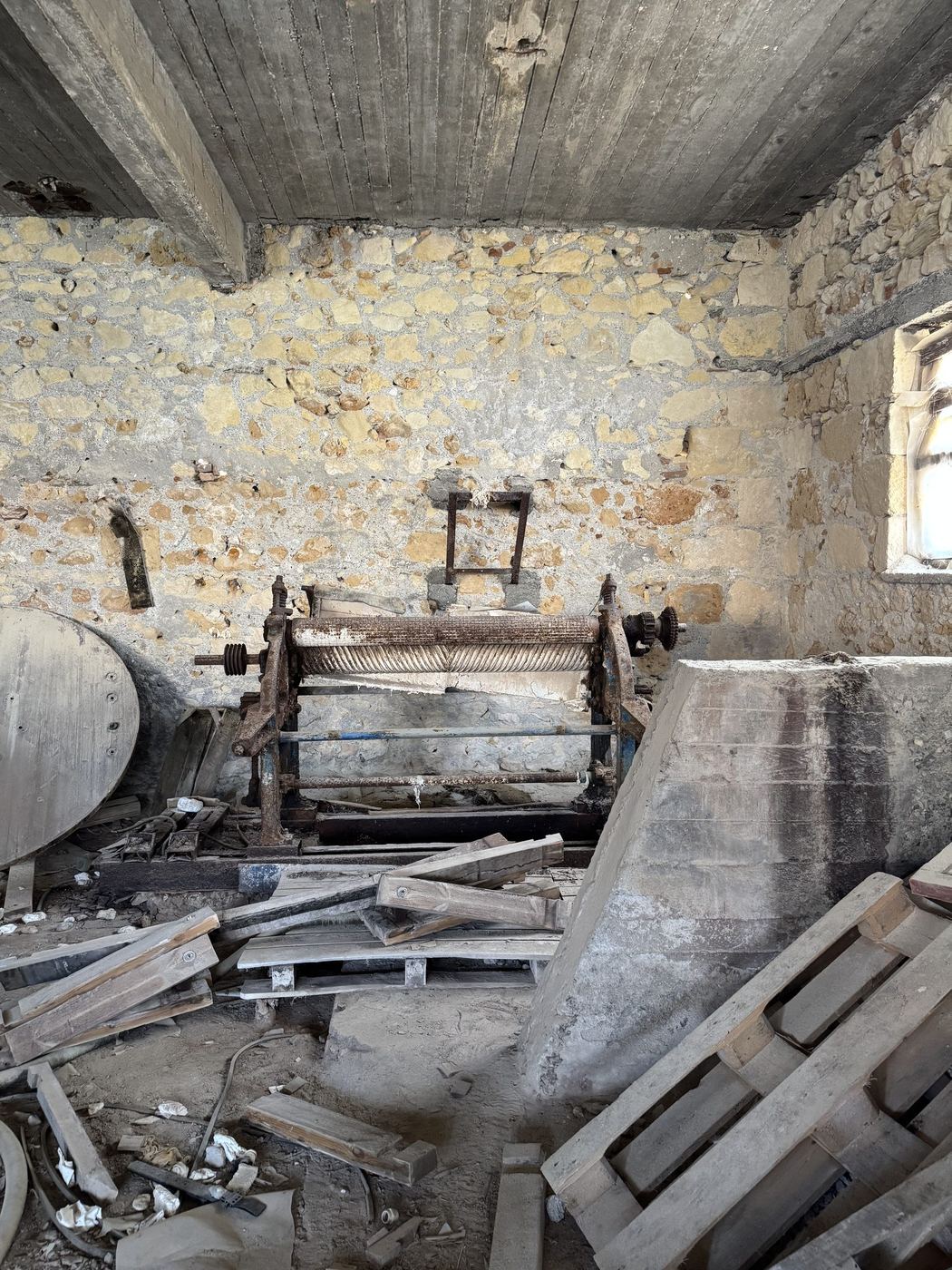
The decline set in around 1970. Larger tanneries elsewhere could produce leather far more cheaply, and there was no way to modernise these buildings without altering them, which their protected status forbids. One by one the owners closed the doors and left the machinery where it stood.
Today between two and six tanneries are still working, depending on who is counting, employing fewer than twenty people between them.
VThe buildings
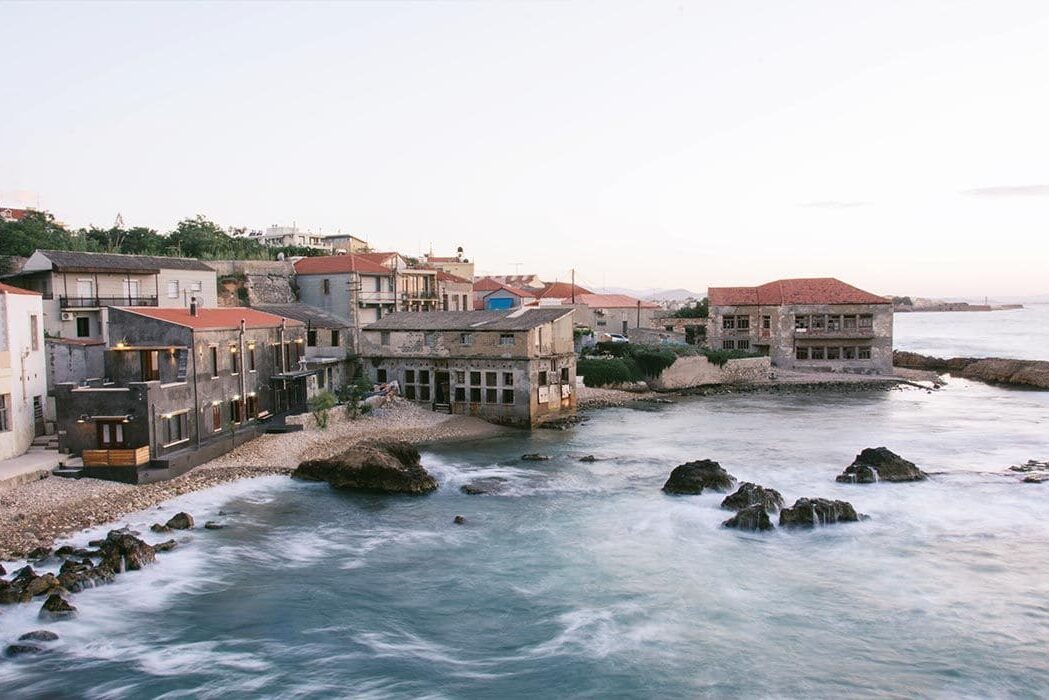
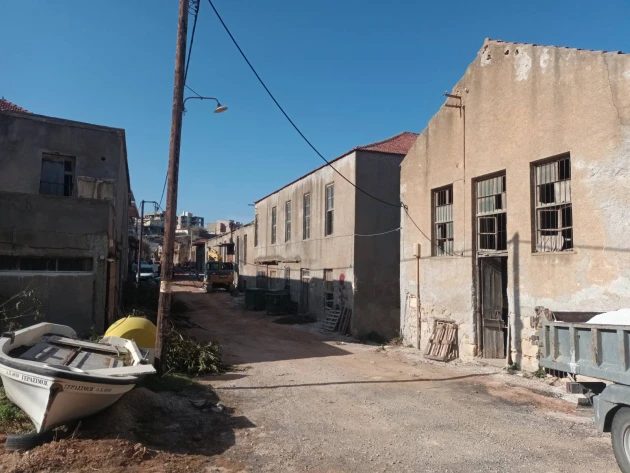
The tanneries are long and narrow and stand at right angles to the shore, so that each one has a front door on the lane and a second face onto the water. Skins and materials came in from the road, and waste went straight out into the sea. Many of the buildings still have the two or three steps that led down to the water at that end.
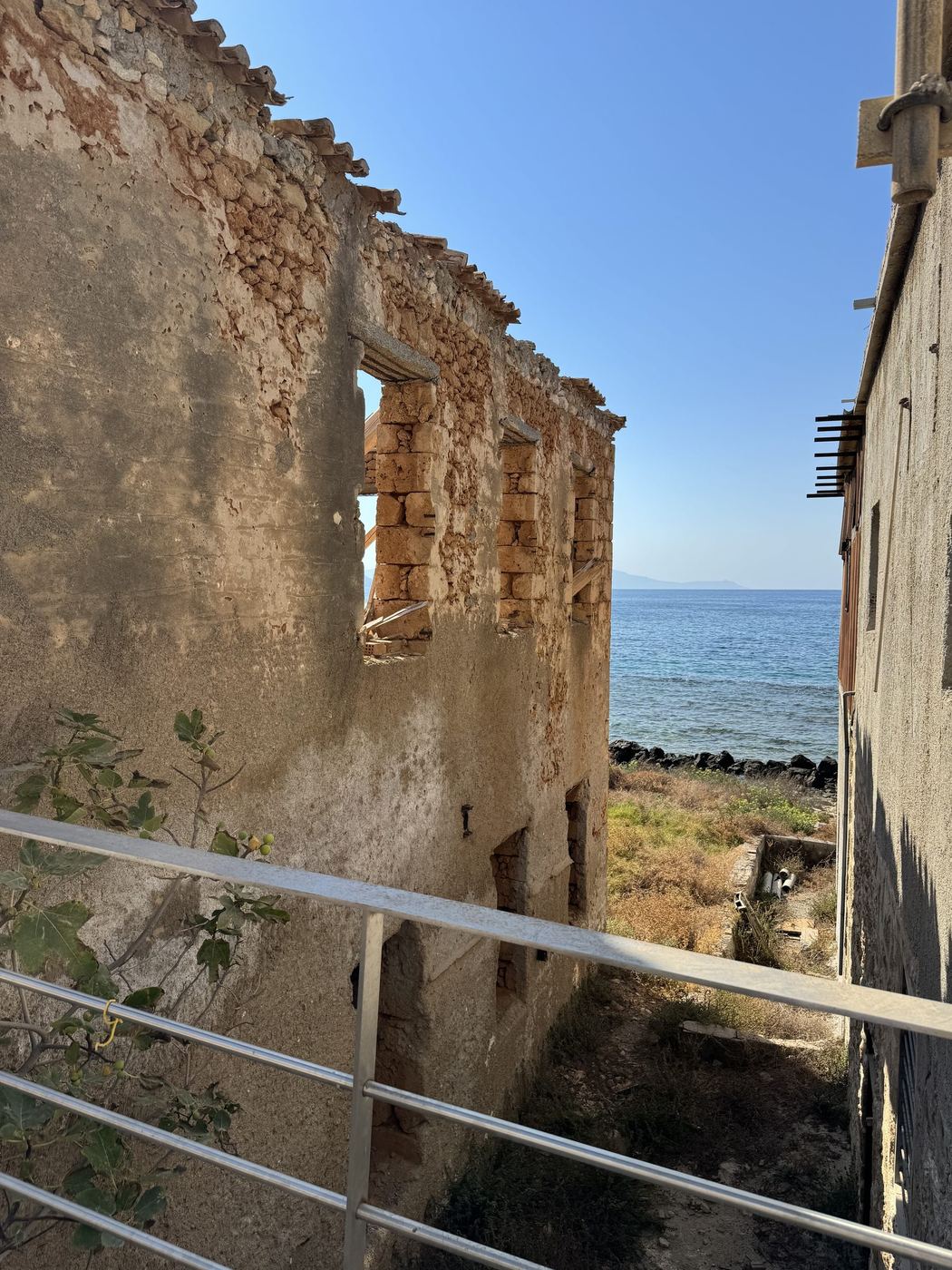
Look up through an open door and you will see iron hooks set into the ceiling beams. Skins were hung from these to dry. The top floor of each building was a drying loft, and its window openings were fitted with wooden slats, like a shutter left ajar, so that air moved through while the sun stayed off the leather. Most of the slats have gone, but the tall narrow openings that held them run along every upper floor.
Some of the buildings have marble on their internal stairs, which is not what you would expect to find in a workshop.
VIThe shore
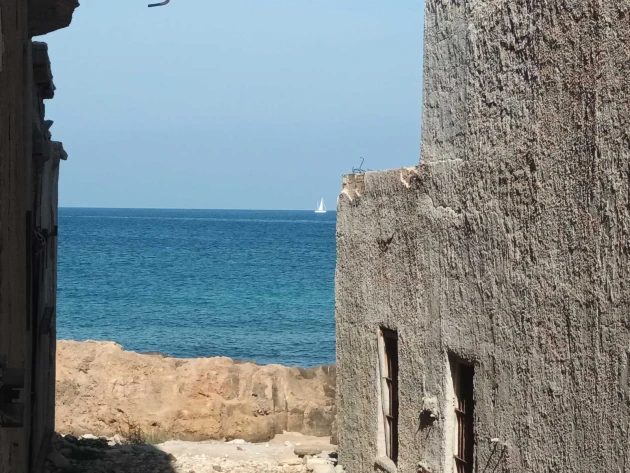
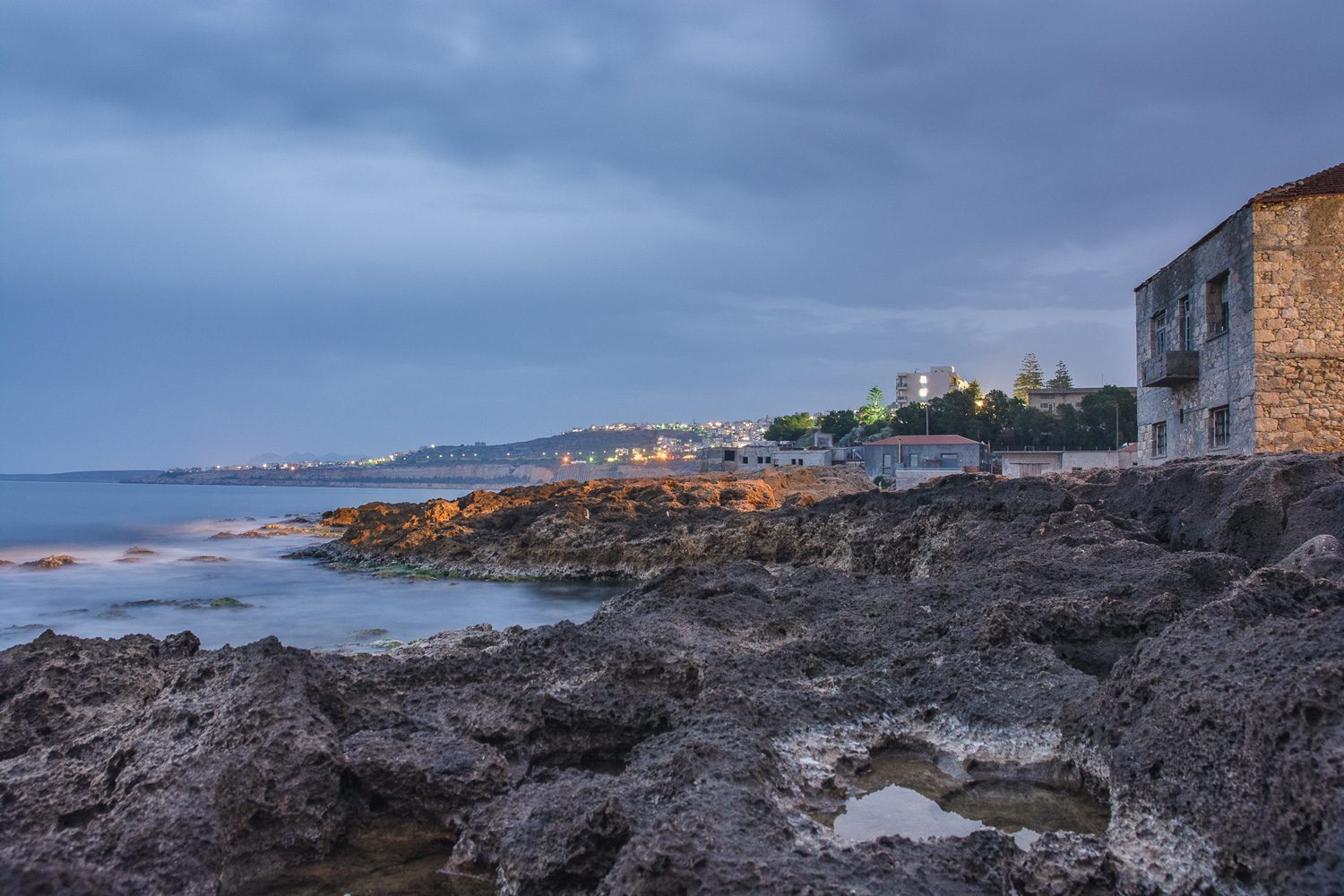
Because the buildings stand in a row with gaps between them, the sea appears as a series of narrow openings as you walk along the lane. The rock itself is low and pitted and holds pools of seawater. People swim from the ledges in the late afternoon. There is no beach.
The town and the mouth of the old harbour lie to the west. To the north, on a clear day, you can pick out the Akrotiri peninsula and the islands beyond it.
VIINow
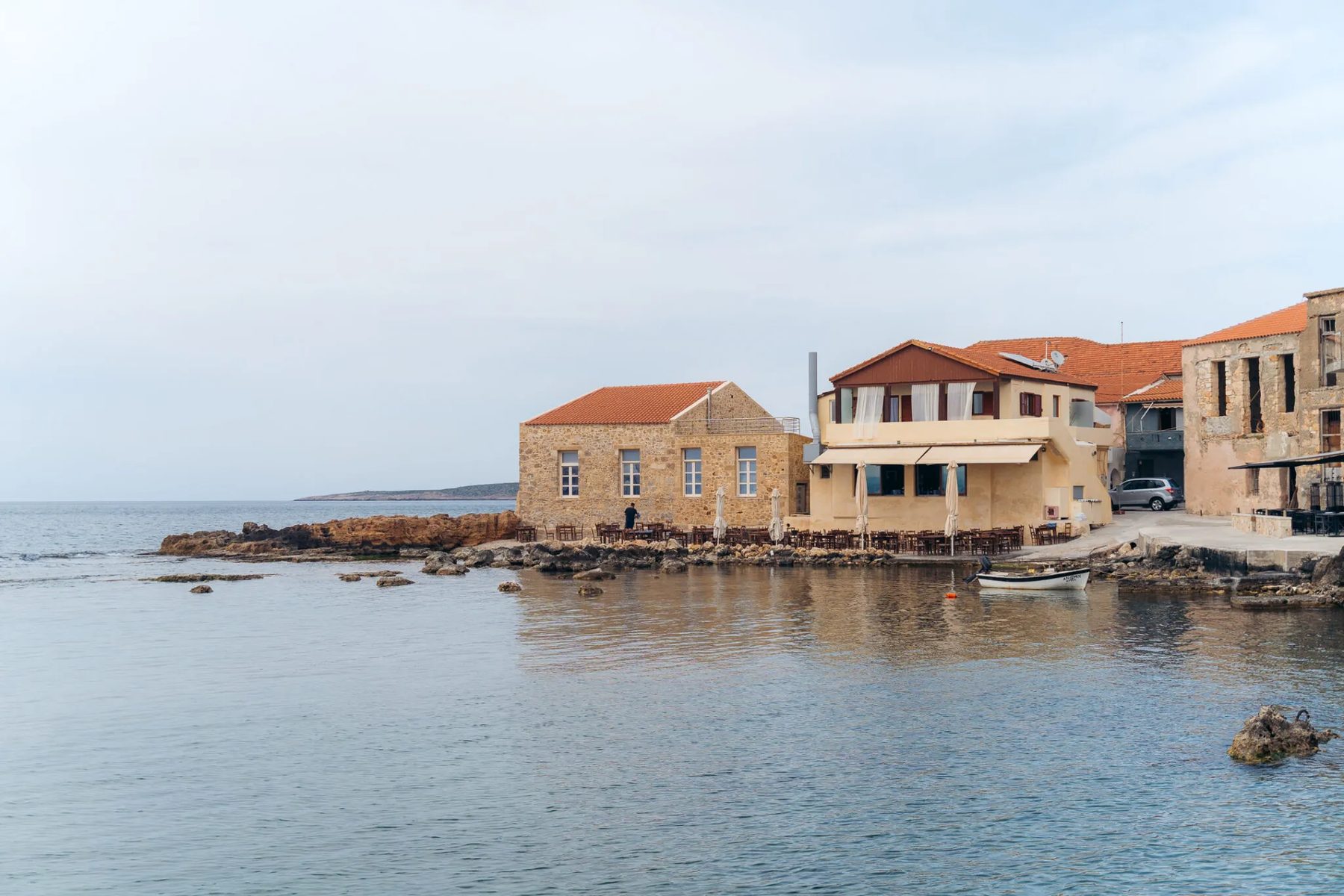
Some buildings are open to the sky with fig trees growing out of the walls. Others have been restored as houses, offices and workshops. There is a taverna on the rock, cars in the lane and washing hung out.
The whole district is protected, and that explains the mixture. Any restoration has to keep the original stonework and the outside walls as they are, which makes the work slow and expensive, so a great many buildings simply sit empty. It is also the reason the place still looks the way it did.
VIIIVisiting
Vivilaki Street, Halepa, Chania 731 33. About two kilometres east of the old harbour.
Roughly half an hour on foot along the coast from Koum Kapi, or a short taxi ride. Parking in the lane is limited and awkward.
Late afternoon, when the light comes off the water onto the stone. Sunset from the rocks is why most people come.
Nothing at all. This is a public street rather than a managed attraction, so there is no ticket and no gate.
The buildings are privately owned and many are structurally unsafe. Look from the lane and the rocks rather than going inside.
People live and work here. It is worth remembering that the quiet belongs to somebody's street.